What's an arrhythmia?
An arrhythmia (also known as dysrhythmia) can be an irregular or unusual heartbeat.
What are the forms of arrhythmias?
• Tachycardia: An easy heart rhythm with an interest rate greater than 100 beats each and every minute.
• Bradycardia: A slow center rhythm with an interest rate below 60 beats each and every minute.
• Supraventricular arrhythmias: Arrhythmias that start inside the atria (the heart’s higher chambers). “Supra” indicates above; “ventricular” identifies the low chambers of the center, or ventricles.
• Ventricular arrhythmias: Arrhythmias that start inside the ventricles (the heart’s lower chambers.
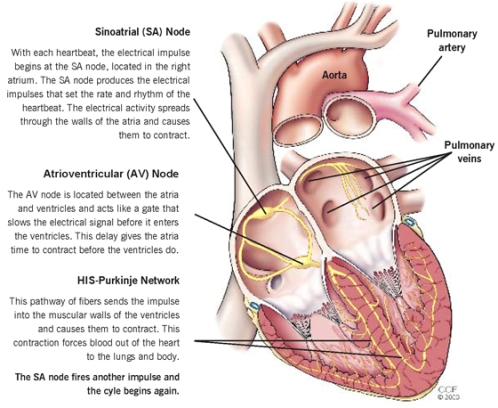
• Bradyarrhythmias: Slow center rhythms which may be caused by disease inside the heart’s conduction program, like the sinoatrial (SA) node, atrioventricular (AV) node or HIS-Purkinje network (notice “The Heart’s Electrical Program” section on another page).
What causes arrhythmias?
Arrhythmias can be due to:
coronary artery disease •
• High blood pressure
• Changes in the center muscle (cardiomyopathy)
• Valve disorders
• Electrolyte imbalances inside the blood, such as for example potassium or sodium
• Injury from a coronary attack
• The healing up process after heart surgery
• Other medical conditions
Heart Rhythms on ECG
The heart’s electrical system triggers the heartbeat. Each defeat of the heart is usually represented on the electrocardiogram (EKG or ECG) by way of a wave arm.
Normal Heart Rhythm
The normal center rhythm (normal sinus rhythm) shows the electrical activity in the center is following normal pathway. The rhythm is usually normal and the node will be regular (about 50 to 100 beats each and every minute).
Read more infomation: Best Stethoscope for doctors
The Heart’s Electrical Program
The atria (the heart’s higher chambers) and ventricles (the heart’s lower chambers) interact, contracting and calming to pump blood via the heart alternately. The electric system of the center may be the charged power source which makes this possible. Here’s what happens throughout a normal heartbeat:
Irregular heart rhythms may appear in normal, healthy hearts. Arrhythmias could be due to certain substances or medicines also, such as for example caffeine, nicotine, alcoholic beverages, cocaine, inhaled aerosols, weight loss supplements, and cough and cool remedies. Emotional claims such as shock, fright or tension may also cause irregular center rhythms.
Arrhythmias which are recurrent or linked to an underlying center condition tend to be more concerning and should continually be evaluated by way of a doctor.
In most cases, treating the underlying issue shall look after the arrhythmia. If not, many medicines and procedures can be found to get rid of or control the unusual heart rhythm.
What's my pulse?
Your pulse indicates your heartrate, or the amount of periods your heart beats in a single minute. Pulse rates change from person to individual. Your pulse is slower if you are at raises and rest once you exercise, since even more oxygen- rich blood is necessary by the physical entire body during exercise.
How do you take my pulse?
It is possible to tell how fast your heart is beating by feeling your pulse. It is possible to feel your pulse on your own neck or wrist. Place the ideas of one's index and middle fingertips on the internal wrist of one's other arm, below the bottom of one's thumb just. Or, place the ideas of one's index and middle fingertips on your own lower neck, on either relative side of one's windpipe. Press lightly together with your fingers until you have the bloodstream pulsing beneath your fingertips. You may want to move your fingers around up or down and soon you have the pulsing slightly.
You can count the amount of beats in 10 secs and multiply by 6 to find out your heartrate in beats each and every minute. A normal heartrate, at rest, is 50 to 100 beats each and every minute.
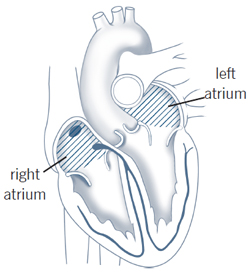
Forms of Supraventricular Arrhythmias
Forms of supraventricular arrhythmias include:
Supraventricular arrhythmias begin inside the atria
• Premature atrial contractions (PACs): Early, additional heartbeats that originate inside the atria.
• Paroxysmal supraventricular tachycardia (PSVT): An instant but regular center rhythm that originates from the atria. This kind of arrhythmia suddenly begins and ends.
• Accessory pathway tachycardias (such as for example Wolff- Parkinson-White syndrome): An easy heart rhythm due to an extra, abnormal electrical pathway or connection between your atria and ventricles. The impulses traveling through the excess pathways and also the usual route. This enables the impulses to visit around the heart rapidly, evoking the heart to defeat fast unusually.
• AV nodal re-entrant tachycardia (AVNRT): An easy heart rhythm due to the presence of several pathway through the atrioventricular (AV) node.
• Atrial tachycardia: An instant center rhythm that originates inside the atria.
• Atrial fibrillation: An extremely common irregular center rhythm. Several impulses spread and commence through the atria, competing for to be able to traveling through the AV node. The resulting rhythm will be disorganized, irregular and rapid. As the impulses are journeying through the atria in a disorderly style, there is a lack of coordinated atrial contraction.
• Atrial flutter: A good atrial arrhythmia due to a number of rapid circuits inside the atrium. Atrial flutter is more structured and normal than atrial fibrillation usually.
Forms of Ventricular Arrhythmias
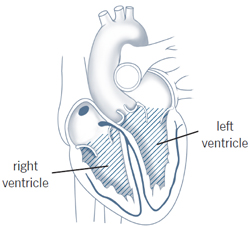
A new ventricular arrhythmia begins in the heart’s ventricles. Forms of ventricular arrhythmias include:
Ventricular arrhythmias begin inside the ventricles
• Premature ventricular contractions (PVCs): Early, additional heartbeats that originate inside the ventricles. The majority of the right time, PVCs don’t result in any observeable symptoms or require therapy. This kind of arrhythmia is typical and can be linked to stress, too much coffee or nicotine, or workout. They may be caused by cardiovascular disease or electrolyte imbalance also. People who have various PVCs and/or symptoms connected with them ought to be evaluated by way of a cardiologist (heart physician). Find out more about premature ventricular contractions.
• Ventricular tachycardia (V-tach): An instant heartbeat that originates inside the ventricles. The fast rhythm keeps the center from filling with bloodstream adequately, and less blood can pump through your body. V-tach could be serious, in people who have heart disease especially, and may be connected with more signs and symptoms than other styles of arrhythmia. A cardiologist should assess this condition.
• Ventricular fibrillation (V-fib): A good erratic, disorganized firing of impulses from the ventricles. The ventricles and cannot generate a highly effective contraction quiver, which results in too little blood being sent to the physical body. It is a medical crisis that must be dealt with cardiopulmonary resuscitation (CPR) and defibrillation (shipping of a power shock to the center muscle tissue to restore a standard rhythm) as quickly as possible. Find out more about sudden cardiac death.
• Long QT: The QT interval may be the area on the ECG that represents enough time it will take for the center muscle to agreement and then recover, or for the electric impulse to fire and recharge. Once the QT interval will be longer than normal, the chance is increased because of it for “torsade de pointes,” a life-threatening type of ventricular tachycardia.
Types of Bradyarrhythmias
A bradyarrhythmia is really a slow heart rhythm that's usually due to disease in the center’s conduction system. Forms of bradyarrhythmias include:
• Sinus node dysfunction: Gradual heart rhythms because of an unusual SA node.
• Heart block: A new delay or complete block of the electric impulse since it travels from the sinus node to the ventricles. The known degree of the block or delay might occur in the AV node or HIS-Purkinje system. The heartbeat may be irregular and slow.
What are the outward indications of an arrhythmia?
An arrhythmia could be “silent” rather than cause any signs and symptoms. A doctor can identify an irregular heartbeat during an evaluation by firmly taking your pulse, hearing your center or by executing diagnostic tests.
If signs and symptoms occur, they could include:
• Palpitations: A sense of skipped heartbeats, fluttering, "flip-flops" or experiencing that the center is "running away"
• Pounding in the upper body
• Dizziness or experiencing lightheaded
• Shortness of breath
• Chest discomfort
• Weakness or exhaustion (feeling very tired)
How can be an arrhythmia diagnosed?
If you have outward indications of an arrhythmia, you need to schedulae an appoitment with a cardiologist. You might want to notice an electrophysiologist - a cardiologist who has extra specialized trained in the diagnosis and therapy of heart rhythm problems.
After evaluating your symptoms and performing a physical examination, the cardiologist may perform selection of diagnostic tests to greatly help confirm the current presence of an arrhythmia and indicate its causes.
Some tests which may be accomplished to confirm the current presence of an irregular center rhythm include:
• Electrocardiogram (ECG or EKG): An image of the electrical impulses journeying through the heart muscle tissue. An ECG is documented on graph paper, by using electrodes (little, sticky patches) which are connected to your skin layer on the chest, legs and arms.
• Ambulatory monitors, such as for example:
o Holter keep track of: A little portable recorder that's attached to electrodes on your own chest. It continuously information your center’s rhythm every day and night.
o Transtelephonic keep track of: A little monitor is mounted on electrode leads, on your own finger or wrist usually. By using this product, your heart’s rhythm will be transmitted on the phone range to your doctor’s workplace.
o Transtelephonic keep track of with a storage loop: A little, portable recorder that's worn continuously for a protracted time period to record and conserve information regarding your heart’s rhythm round the time you have an arrhythmia. The documenting is set off by pushing a key (event key). The rhythm is documented, transmitted and stored on the phone line.
Echocardiogram
• Stress test: A check used to report arrhythmias that begin or are usually worsened with workout. This test also could be useful in determining when there is underlying cardiovascular disease or coronary artery condition connected with an arrhythmia.
• Echocardiogram: A kind of ultrasound used to supply a look at of the center to determine when there is heart muscle tissue or valve disease which may be leading to an arrhythmia. This test could be performed at relaxation or with activity.
• Cardiac catheterization: Utilizing a local anesthetic, a new catheter (small, hollow, versatile tube) is inserted right into a bloodstream vessel and guided to the center by using an X-ray device. A contrast dye will be injected through the catheter so X-ray movies of one's coronary arteries, heart chambers and valves could be taken. This check helps your physician determine if the reason for an arrhythmia will be coronary artery disease. This test furthermore provides information regarding how well your center muscle and valves will work.
• Electrophysiology research (EPS): A special center catheterization that evaluates your heart’s electrical program. Catheters are usually inserted into your center to record the electric activity. The EPS can be used to discover the reason behind the unusual rhythm and determine the very best treatment for you. Through the test, the arrhythmia could be reproduced and terminated.
• Tilt table test (also known as a passive head-up tilt check or mind upright tilt test): Information your blood circulation pressure and heartrate on a minute-by-minute schedule while the desk will be tilted in a new head-up position at various levels. The test outcomes might be used to judge heart rhythm, blood pressure along with other measurements as you switch position sometimes.
How can be an arrhythmia treated?
Treatment depends on the severe nature and kind of your arrhythmia. In some full cases, no treatment is essential. Treatment plans include medications, changes in lifestyle, invasive therapies, electrical surgery or devices.
Medications
Antiarrhythmic drugs are medications utilized to convert the arrhythmia to a standard sinus rhythm or even to prevent an arrhythmia. Additional medications can include heart rate-control medications and anticoagulant or antiplatelet medications such as for example warfarin (a “blood slimmer”) or aspirin, which lessen your threat of stroke or establishing blood clots.It is necessary that you know the real names of one's medications, why they're prescribed, how usually and at what periods to take them, what side effects may occur, and what medications you took for the arrhythmia previously.
Lifestyle changes
Arrhythmias might be linked to certain lifestyle factors. The following tips might help reduce your risk:
• In the event that you smoke, stop.
• Curb your intake of alcohol.
• Restriction or stop using coffee. Some social folks are sensitive to caffeine and could notice more symptoms when working with caffeinated products, such as for example tea, coffee, colas plus some over-the- counter medications.
• Avoid using stimulants. Avoid stimulants found in cough and cool medications and organic or nutritional supplements. Some of these elements contain things that cause irregular center rhythms. Browse the label and request your physician or pharmacist which medicine is most beneficial for you.
• Your family could also want to end up being involved with your care by understanding how to recognize your signs and symptoms and how to begin CPR if needed.
• If you observe that your irregular center rhythm occurs more regularly with certain activities, they must be avoided by you.
Electrical catheter and cardioversion ablation are invasive therapies utilized to take care of or eliminate irregular heart rhythms. Your physician will determine the very best treatment for you personally and discuss the huge benefits and risks of the therapies with you.
Electrical Cardioversion
• Electrical cardioversion Sufferers with persistent arrhythmias, such as for example atrial fibrillation, might not be capable to achieve a standard heart rhythm with medication therapy only. Electrical cardioversion delivers a power shock to your upper body walls, which synchronizes the center and allows the standard rhythm to restart. This process is done once you receive short-acting anesthesia.
• Catheter ablation: During ablation, energy is delivered by way of a catheter to small areas of the center muscle. This power can either “disconnect” the pathway of the unusual rhythm, block the unusual pulses and promote regular conduction of impulses, or disconnect the electric pathway between your atria and the ventricles.
Ablation is frequently used to take care of paroxysmal supraventricular tachycardia (PSVT), atrial fibrillation, atrial flutter, AV nodal re-entrant tachycardia and ventricular tachycardia. Ablation could be coupled with other procedures to attain optimal treatment.
Electrical devices
• Permanent pacemaker: A tool that sends small electric impulses to the center muscle tissue to maintain a standard heartrate. The pacemaker includes a pulse generator (which homes an electric battery and a little computer) and leads (cables) that deliver impulses from the pulse generator to your center muscle, along with sense the heart’s electric activity. Pacemakers are mainly used to prevent the center from beating too gradually. Newer pacemakers have several sophisticated features that can assist manage arrhythmias, optimize center rate-related features and improve synchronization.
• Implantable cardioverter-defibrillator (ICD): A complicated digital camera used primarily to take care of ventricular tachycardia and ventricular fibrillation - two life-threatening unusual heart rhythms. The ICD monitors the center rhythm constantly. When it detects an extremely fast, abnormal center rhythm, it delivers power to the center muscle to result in the heart to defeat in a standard rhythm again.
There are many ways an ICD can restore a standard heart rhythm:
• Antitachycardia pacing (ATP): Once the heart beats as well fast, a number of small electric impulses are sent to the heart muscle tissue to revive a normal heartrate and rhythm.
• Cardioversion: A low-power shock is delivered simultaneously as the heartbeat to revive a standard heart rhythm.
• Defibrillation: When the center is defeating dangerously quick or irregularly, an increased energy shock is sent to the heart muscle tissue to revive a normal rhythm.
• Antibrachycardia pacing: Several ICDs provide back-up pacing to avoid heart rhythms which are too slow.
Surgery may be had a need to correct arrhythmias that can’t end up being controlled with medications or even non-surgical treatment methods. Arrhythmia surgery could be recommended if you want surgery also, such as for example bypass or valve medical procedures, to correct other styles of cardiovascular disease. The Maze and altered Maze processes are two surgeries utilized to improve atrial fibrillation.Your physician shall determine the very best treatment for you personally and discuss these options with you, including more info about surgical therapy if it is a proper treatment option.
